Busy restaurants, empty profits – and what we do differently
Do you keep up with industry news? I do, and if you’ve been paying attention lately, you’ll have noticed something a bit contradictory going on. Certain kinds of restaurants are struggling to survive, while others are positively booming. The headlines in the trade press are all over the place, and that contrast can tell us quite a lot about where the industry is heading.
Two pieces in particular caught my attention this month – the first was from The Economist: Franchising has quietly made countless Americans rich. It focuses on the US market, but the principles it describes apply just as well over here and it makes a strong case for why the franchise model, done properly, continues to outperform so many of the alternatives.
The second was from The Guardian: The British food scene was booming. Why has it suddenly gone bust? This one hit closer to home, and it’s where things get really interesting.
The problem isn’t the food. It’s the numbers.
Now, this is a long article which is mostly about fine-dining and how high-end restaurants are in decline, with more than 20% of Michelin-starred restaurants having closed permanently in the last 5 years. However, one part really stood out for me, and that was the discussion about profit margins.
Tom Kerridge was interviewed for the piece, and what he said stopped me in my tracks. Even in boom times, he explained, high-end restaurants typically see profit margins of around 10% at best. Around 5% or less is more common and, right now, many are running at cost if they are very lucky. Many more are making a loss.
Read that again. Ten percent. In the good times.
The kind of people who eat at Michelin-starred restaurants haven’t stopped having money. The problem is that those restaurants are burning through it almost as fast as it comes in – on expensive ingredients, on high staffing costs, on complex operations that were never designed with efficiency in mind.
So what does Just Pizza & Pasta look like by comparison?
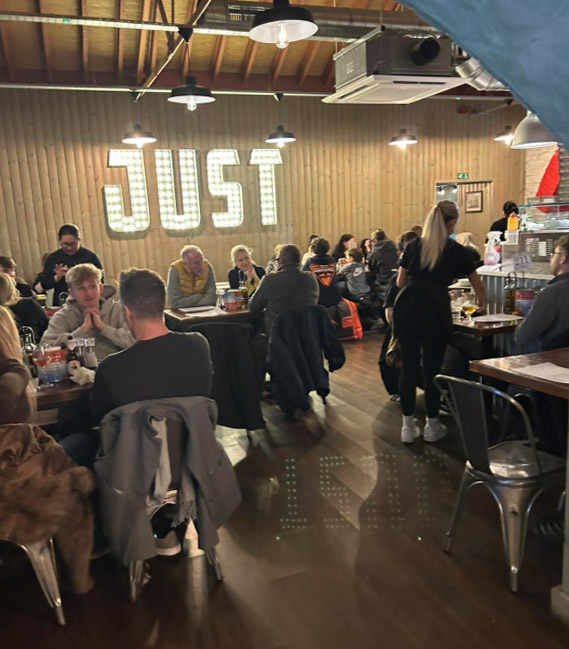
We regularly achieve profit margins of 18 to 20%. That is not a one-off good month. That is what our model is designed to deliver, consistently, and it held up even when more than 5,000 customers came through our doors during the Isle of Man TT in just two weeks. Our systems were pushed hard, but the margins held. They always do.
The reason is straightforward – we have streamlined our operations, kept the staffing model lean, and built a menu that focuses entirely on what works and what sells, not on what looks impressive on a page. There are not dozens of dishes that nobody ever orders, no unnecessary complexity in the kitchen. Everyone knows exactly what their role is and how it fits into the overall operation of the restaurant. The result is a modern, agile business that generates real profit, not just revenue.
And here’s what I find particularly interesting.
My flagship restaurant is on the Isle of Man. Everything we serve has to be shipped across from the mainland, which adds cost to every ingredient I buy. Wages here are also higher than in many parts of the UK, and the pool of people available to hire is much smaller than it would be in any major city.
Even with all of that working against us, we are still hitting those margins. Which means that in a UK mainland location which is closer to suppliers, with more flexibility on staffing, and without the logistics of running a business on an island, the numbers should look even better.
Think about what that means if you are seriously considering opening your own restaurant.
Turnover is not the goal – profit is.
I posted something on LinkedIn recently about this, because I think the whole industry needs a conversation about it. Too many restaurant businesses are obsessed with how much money is coming in the door, without asking the harder question: how much of it actually stays?
Sales don’t pay the mortgage. Profit does.
The operators who are not only going to survive the next decade, but positively thrive in it, are the ones who are the most efficient, and the most focused.
That is exactly what Just Pizza & Pasta has been built to do.
If you have been thinking about investing in a restaurant business and want to understand how our model works and why the numbers look the way they do, let’s have a conversation. There is no pressure and no sales pitch, just an honest discussion about whether this could be the right opportunity for you.
Get in touch by emailing me at mitch@justpizzaandpasta.com or WhatsApp me on 07973 493787.